
Top

  • slide-6

New Website Material Coming!

From Centre for Whale Research’s low-key beginnings in 1990 operating from a tin shed campsite on Enderby Island in the Dampier Archipelago, NW Australia to sailing the high seas aboard our good ship RV Whale Song, the CWR Team has travelled thousands of sea miles, observed tens of thousands of cetaceans and collected hundreds of thousands of whale and dolphin photographs.

Since launching our CWR website in 2009 to tell some of these stories and share our daily whale research, we have re-modelled the format and content several times. Now in 2026, it is time for some more changes and updates!

Over the next few months, we will be refreshing some of the material in the drop-down menus on the Home Page. The history of our early research and vintage photographs will remain, such as loaded in About Us and Our Story. From low-key and low-tech whale research projects during our early years to our ever-evolving offshore research using different sized vessels, working from varying research locations and engaging cutting-edge technology, CWR’s research ethos remains the same. Understanding the migration paths and patterns of various cetacean species is central to conserving and protecting their critical habitats.

There will be upgrades in the Resources/Photo Gallery/New Gallery. Keep an eye out for selected images of Divine Dolphins, Minke Magic and Skipper of the Scuppers! and more!

In Resources we will be adding Scientific Publications with links to scientific research papers that CWR scientists have been involved with, as authors providing data, images and assisting editing.

Despite some refreshes on our CWR Website, our CWR message remains the same. Conserving critical habitats of cetaceans (whales, dolphins and porpoises), ensures that the ocean and indeed our planet remains in good health.

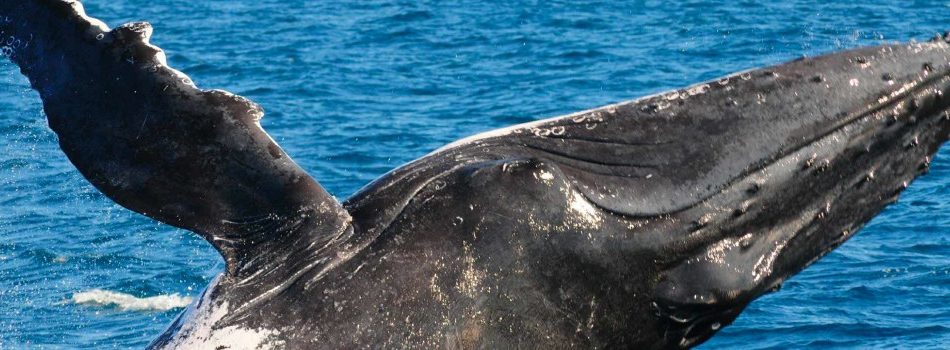
B-R-E-A-C-H! A full-bodied breach of a humpback whale is a sight to behold! During their annual northern and southern migration along Australia’s east and west coasts, keep an eye out for huge splashes on the horizon or close to shore as humpback whales leap clear out of the water! Photo: M. Jenner AM.


Whale Biology – A Window into Our Oceans

Whales are the largest creatures on the planet, yet, like so many other fish, birds, and seals, they depend on tiny animals at the bottom of the oceans’ food chain to survive – krill. Krill, in turn, are the most plentiful protein source on the planet, and their abundance is tied to ocean health at a primary level – a system that in fact echoes global ecosystem stability.  In other words, an ocean full of krill is a biologically stable ocean, and that means our world is coping with natural and human initiated climate changes. The question is, how do we monitor this vital system?

Our goal at CWR is to understand the health of our oceans by monitoring and protecting the population health of the largest animals on the planet – the great whales.  Conserving their critical habitats ensures that the ocean, and indeed the planet, remains in good health.

CWR began with a humpback whale population measuring program in the Dampier Archipelago in 1990 and from research in the Kimberley, CWR guided the state government in the establishment of a new marine park for humpback whale calving/breeding grounds. The Lalang-garram/Camden Sound Marine Park is now in place in the Kimberley protecting vital calving/breeding grounds of the west coast humpback whale population. CWR research work expanded to include pygmy blue whales in 1999 in the Perth Canyon. This important feeding area for pygmy blue whales is now protected by the Perth Canyon Commonwealth Marine Reserve.

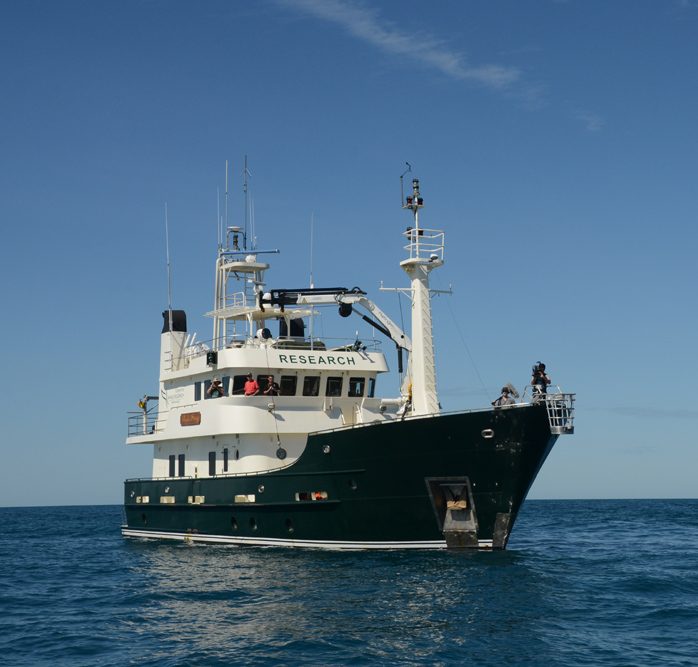
Based on RV Whale Song, CWR’s scientists conduct research all around Australia and into the Southern Ocean.

A mother and calf humpback whale pair rest in the calm waters of Lalang-garram/Camden Sound Marine Park in the Kimberley. Photo: M. Jenner AM.


Whale News

In the Queen’s Birthday 2018 Honour List announced on June 11, 2018, Curt and Micheline Jenner were each appointed as a Member of the Order of Australia (AM).

Their appointments have been granted “For significant service to conservation and the environment, particularly whale research in Western Australia”.

Curt and Micheline appreciate the support of their wonderful families in Australia and Canada in all of their endeavours. Over the course of 30 years, many people have been involved in this research, including their always-there friends, their dedicated Research Associates, Research Assistants and volunteers. Multiple projects and scientific papers have resulted from collaborative research with many scientific colleagues. They are delighted, thrilled and honoured to receive such an award.

Their work is not yet done for the whales. Globally, cetaceans are still under threat from many issues affecting their ocean home. Fish stock depletion, sound pollution from increased shipping volumes and elevated vessel speeds and oceanic garbage patches indicating 8 million tonnes are being dumped annually, are currently in the spotlight.

There are many creative solutions available. Each and everyone can all make small changes that will make a difference! Start today by rethinking your relationship with single-use plastic in every aspect of our lives. Let’s be green for the whales, the ocean and even to save ourselves and our beautiful planet.

Beautiful pygmy blue whale. Let’s be green for the blue whales. Photo: M. Jenner AM.


Fluke Up!

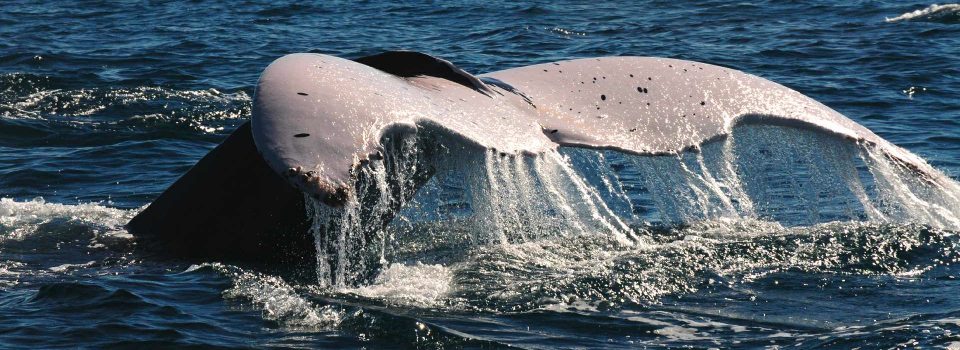
Sperm whales (Physeter macrocephalus) raise their huge strong flukes in a deep dive or sounding dive reaching depths of 3 km for up to 2 hours duration. At depth, they feed on squid which they “sound to death” with the powerful clicks of their echolocation.

Sometimes white ring-shaped scars from the squid tentacle suckers remain on the distinctively boxy head of these fascinating sperm whales. The dark wrinkled skin is mainly dusky grey-brown, long strips of which, peel off their bodies while swimming.

The broad, triangular-shaped dark tail flukes often have a ragged trailing edge with a deep notch, seen as the flukes are thrown vertically upon commencement of a sounding dive.

Down For An Hour. Make a cup of coffee or two, even lunch–this whale will be down for an hour! Photo: M. Jenner AM.

As a 22 metre long pygmy blue whale raised its’ 7 metre wide tail flukes in a sounding dive, Skipper was ecstatic! Photo: M. Jenner AM.


Powered by OM4

UA-17929247-1